
- A whole-home renovation becomes necessary when small fixes no longer solve deeper layout, system, or functionality issues, and the home no longer supports daily life comfortably.
- Starting fresh involves planning, structural clarity, and designing the home as one cohesive system rather than a series of isolated upgrades.
- The success of a full renovation depends heavily on thoughtful coordination, practical decision-making, and working with the right contractor to manage complexity without added stress.
There’s a point where fixing one thing at a time stops making sense. A new coat of paint doesn’t solve the deeper issues. A small upgrade feels temporary. And slowly, you realize the home you’re living in no longer matches the life you’re living. That’s usually when the idea of a whole-home renovation enters the conversation. Not as a luxury, but as a reset. A chance to rebuild your space with intention instead of patching over old problems. Starting fresh means designing a home that finally works for you, today and for years ahead.
Here is how to know when it’s time, what it really involves, and how a whole-home renovation can change more than just the way your house looks.
1. The Signs That Small Fixes Are No Longer Enough
Most homeowners don’t wake up one morning and decide to renovate everything. The decision builds slowly, through frustration, compromise, and workarounds that stop working.
a. When Every Room Feels Disconnected
One of the clearest signs is inconsistency. Different flooring in every room. Layouts that don’t flow. Spaces that feel like they belong to different houses entirely.
These issues usually come from years of piecemeal updates. One project at a time. One quick fix after another. Over time, the home loses cohesion. A whole-home renovation restores balance by creating a unified plan instead of isolated improvements.
b. When Layout Matters More than Finishes
You can replace surfaces endlessly, but if walls are in the wrong place, nothing truly improves. Tight kitchens. Awkward hallways. Rooms that don’t get enough light. These frustrations tend to surface slowly, then all at once.
These are structural problems, not cosmetic ones. A full renovation allows you to rethink how space is used, not just how it looks. It’s the difference between upgrading a room and redesigning how your home actually functions.
When circulation improves and light flows naturally, the entire house starts to feel calmer and easier to live in.
c. When Systems Start Showing Their Age
Outdated electrical, plumbing, or structural elements often hide behind walls until they become unavoidable. Flickering lights. Inconsistent water pressure. Aging materials that were never meant to last this long. These issues rarely announce themselves politely.
A whole-home renovation creates the opportunity to address these systems together, safely and efficiently, instead of reacting to failures one at a time.
Handling them proactively reduces long-term risk and prevents newer finishes from being compromised by old infrastructure later on.
d. When Your Life Has Changed, But Your Home Hasn’t
Families grow. Work moves home. Daily routines shift. The home that once fit perfectly may now feel limiting or oddly inefficient. Small inconveniences begin to pile up and affect everyday comfort.
Renovation becomes less about style and more about alignment. Creating space for how you actually live now, not how you lived years ago. When a home adapts to your current reality, daily routines become smoother, and stress quietly fades into the background.
e. When Renovating Part by Part Costs More in the Long Run
Staggered renovations often mean repeated labor, repeated disruptions, and repeated design compromises. Each project solves one problem while creating another somewhere else.
A whole home renovation allows for smarter planning, better sequencing, and long-term cost efficiency. Everything works together, instead of competing for budget and attention.
It also means living through construction once, instead of being stuck in an ongoing cycle of half-finished upgrades.
2. What Starting Fresh Means
Starting fresh doesn’t mean tearing everything down blindly. It means planning, thoughtful design, and clear priorities from the very beginning.
a. Beginning with Structure
The strongest renovations start beneath the surface. Evaluating framing, load paths, utilities, and long-term durability before thinking about finishes sets the foundation for everything that follows.
This approach prevents expensive surprises later and ensures the home is built to last, not just impress. When the structure is sound, design choices become easier and more confident instead of reactive.
b. Designing the Home as One Complete System
In a full renovation, each decision affects the next. Floor plans influence lighting. Lighting influences finishes. Finishes influence maintenance and longevity. Nothing exists in isolation.
Seeing the home as one integrated system leads to better outcomes than treating rooms as separate projects. It also creates visual and functional harmony, where spaces flow naturally instead of feeling patched together.
c. Balancing Personal Style with Practical Use
Design trends come and go. Function stays. That balance becomes especially important when renovating an entire home.
A successful renovation blends personal taste with daily usability. Storage where you actually need it. Materials that handle real life.
Choices that feel good now and still make sense in the years to come. When style supports function, the home feels both personal and effortless to live in.
d. Kitchens and Bathrooms as Anchors
These spaces carry the most daily use and the highest expectations. From layout to materials, details matter because small inefficiencies show up every day.
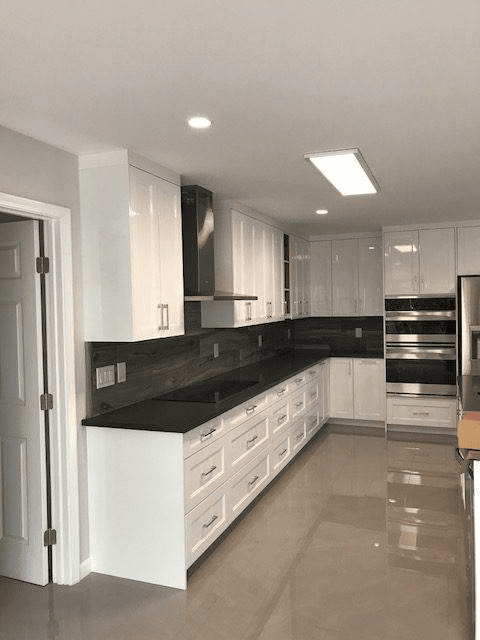
Upgrading kitchen counters, cabinetry, and workflow during a whole-home renovation allows these spaces to align with the rest of the house, instead of standing apart stylistically or functionally.
When these rooms work well, the entire home feels more cohesive and comfortable.
e. Planning for the Future
Accessibility, energy efficiency, and adaptability often become priorities later than expected. What feels unnecessary today can become essential sooner than you think. Building these considerations into a full renovation now avoids future limitations and increases long-term value, comfort, and peace of mind.
A home designed with flexibility in mind remains supportive as needs change over time.
3. Why the Right Contractor Makes All the Difference
A whole-home renovation is not a small project multiplied by ten. It’s a different category entirely. And the outcome depends heavily on who leads it. The right leadership turns complexity into clarity instead of chaos.
a. Coordination Matters More than Speed
A whole-home renovation involves many moving parts. Different trades. Different schedules. Different stages of work that all depend on one another. When those pieces don’t line up, progress slows, even if everyone is working hard.
This is where coordination makes the real difference. An expert contractor focuses on planning the order of work carefully, so each step supports the next instead of getting in the way.
When the process is well-coordinated, the renovation feels steady instead of rushed.
b. Transparency Builds Trust Throughout the Process
Clear expectations. Honest timelines. Open communication. These things matter more during a renovation than almost anything else.
Renovations are complex. Trust comes from knowing what’s happening, why it’s happening, and how decisions affect the overall outcome. Transparency removes uncertainty, which is often the biggest source of stress for homeowners. When updates are clear, you feel involved rather than left guessing.
c. Problem-Solving Is Part of the Job
No renovation unfolds exactly as planned. Hidden conditions appear. Adjustments become necessary, even in the best-run projects.
The right contractor anticipates challenges and responds calmly, keeping solutions aligned with the original vision instead of forcing compromises.
Experience shows most clearly in how unexpected moments are handled, not just when everything goes smoothly.
d. Quality Control Across Every Phase
From framing to finishes, consistency matters. A full renovation requires attention at every stage, not just at the end when everything is visible.
Details add up. Quality shows in how everything fits together, not just in what’s most noticeable.
Strong oversight ensures early decisions support the final result rather than quietly creating problems later.
e. A Renovation Should Feel Managed
Living through a renovation is disruptive enough. The process shouldn’t add unnecessary confusion on top of it.
When the work feels organized and predictable, homeowners can focus on decisions instead of damage control. A well-managed renovation builds confidence along the way, not just when the final reveal happens.
When a Home Finally Feels Right Again
For homeowners who have been fixing, adjusting, and compromising for years, a whole-home renovation becomes the point where the house finally starts working the way it should. It’s an investment in comfort, safety, and daily ease. When done well, it changes how a home feels to live in, not just how it looks. It turns a collection of rooms into a home that finally makes sense again.
Atlas Construction Inc. is where thoughtful planning meets skilled execution for homeowners ready to reimagine their space from the ground up. Get in touch to talk through your ideas and explore how a whole-home renovation can help you start fresh with confidence.